Le truffe fatte bene

Oggi parliamo di truffe sul trading, ma non delle solite truffe, voglio farvi capire come operano i truffatori più furbi.

Partiamo dal presupposto che questi sono truffatori che bazzicano il trading da un po’ e che ovviamente non riescono a guadagnare e che i loro bersagli sono sprovveduti allocchi attratti dal fatto che questi truffatori sono profittevoli e moltiplicheranno i loro soldi, ovviamente i truffati sono principianti perdenti attratti dalle pubblicità di facili guadagni. Non proprio geni.

Come fanno i truffatori a far capire ai truffati di avere di un sistema profittevole al fine di attirarli? Basta appropriarsi di un background, di una storia di trading profittevole, è sufficiente andare su google o su myfxbook e prendere uno screenshot o un link di qualche account profittevole con equity che parte da basso/sinistra e arriva in alto/destra e con profitti da capogiro tipo 1150%, 176% ecc ecc. Altrimenti si fanno backtest con le metatrader, ma attenzione non sono veri backtest, sono test fatti ex post conoscendo come si è mosso il mercato! Si fa andare il test in manuale e si piazzano ordini sui minimi e massimi e si fanno mega profitti, si stampa poi il rapporto e si dimostra di avere “la storia”. Con equity alla “Rocco Siffredi”

Ok, fatto ciò come si può trasferire denaro dalle tasche degli avidi trader alle proprie? Ci sono vari metodi, tralasciando quelli più primitivi e rozzi, vorrei concentrarmi sui metodi più ingegnosi ed in voga in questo periodo: il primo è coinvolgere le persone indirizzandole ad iscriversi al broker “compare” attraverso codici partnership e poi le famose PAMM e MAM (un conto unico dove tanti mettono i soldi e un tizio non identificato li gestisce per loro con metodologie sconosciute oppure tramite expert advisor trada i conti degli ignari). Ovviamente per la regolamentazione comunitaria non è così semplice e ci sono comunque molti modi per bypassare la normativa.

Ok creata la storia, calate le reti e presi molti pesci, come fanno ora i ns eroi a “guadagnare” i soldi dei poveri avidi e stolti risparmiatori? Semplice, iniziano a tradare al loro meglio senza usare gli STOP LOSS e entrando a sfavore di trend, dovresti ora aver capito come fanno a guadagnare, perdendo! Quei soldi persi dove vanno a finire? Nelle tasche del broker “compare” il quale previo accordo col fondatore della PAMM/MAM riconosce una percentuale delle perdite al truffatore il quale guadagna sulle perdite dei suoi clienti. Ho visto famose PAMM bruciare conti che negli anni precedenti avevano performato 1000% e ora guarda caso vanno sotto del 40%! Ovviamente i broker disposti a fare ciò sono broker con sede in paradisi fiscali e i fondatori di queste PAMM sono residenti in chissà quale paese del Sudamerica o dell’est asiatico. Della serie: “vagli a fare causa poi”.

Quindi in definitiva non fatevi abbindolare da questi personaggi, nel trading si va avanti solo se si è onesti, in questo caso onesti con sé stessi: basta chiedersi: dispongo di tempo, denaro, conoscenze e abilità che possono consentirmi di guadagnare? Se la risposta è no bisogna essere onesti con sé stessi e non usare scorciatoie affidando i propri soldi a sconosciuti.

Vestiamoci come Steve Jobs!

steve jobs quotes

In un intervista, un giornalista chiese a Steve Jobs, come mai indossasse sempre le stesse scarpe, lo stesso maglione e gli stessi jeans. Steve diede una risposta sorprendente. Disse che lui passava la sua vita a prendere decisioni, disse che lui era un vero decision maker, con la responsabilità verso milioni di dipendenti, azionisti e clienti, le sue decisioni potevano costare miliardi di dollari. Per questo motivo, Steve disse che vestendosi così cercava solo di evitare decisioni superflue da aggiungere alle numerose decisioni importanti che doveva fare. Non pensate sia fantastico?!

Cosa c’entra ciò col trading? Dobbiamo fare proprio come Steve! Spogliarci del superfluo. Consideriamo anche che noi trader dobbiamo prendere decisioni in modo molto più veloce e avendo molte ma molte meno informazioni che aveva a disposizione Steve. Per questo dobbiamo ridurre all’osso le informazioni, partendo dalle più evidenti, importanti, impattanti e via via scendere nel dettaglio fino a quando inseriamo l’ordine o mettiamo a break even o chiudiamo un’operazione in perdita o decidiamo di chiuderne una in profitto.

Dobbiamo farlo velocemente! Un metodo che uso è quello di pianificare prima cosa fare quando si verificano n eventi in modo da reagire prontamente quando realmente si verificano. Scrivere, scrivere e scrivere, questo è il mio metodo.

Let’s dress like Steve Jobs!

steve jobs quotes

In an interview, a journalist asked Steve Jobs why he always wore the same shoes, the same turtleneck sweater and the same jeans. Steve gave a surprising answer. He said he spent his life making decisions, he said he was a real decision maker, with responsibility to millions of employees, shareholders and customers, his decisions could cost billions of dollars. For that reason, Steve said that by dressing like this, he was just trying to avoid unnecessary decisions to add to the many important decisions he had to make. Don’t you think that’s great?!

What does that have to do with trading? We have to do just like Steve! Get rid of the superfluous. We also consider that we traders have to make decisions much faster and have much less information that Steve had available. That’s why we have to reduce the information to the bone, starting with the most obvious, important, impactful, and then going into detail until we place the order or break even or close a trade at a loss or decide to close one at a profit.

We must do it quickly! One method I use is to plan first what to do when n events occur so that react promptly when they actually occur. Writing, writing and writing, this is my method. 

Perché in Singapore guadagnano tutti col trading?

Questa domanda è nata spontanea dopo aver letto questo articolo https://www.businesstimes.com.sg/banking-finance/worlds-biggest-hedge-fund-returns-found-in-singapore dove si tratta di un hedge fund che ha fatto il 300% in un anno. Ho poi fatto delle ricerche e ho visto che a Singapore ci sono migliaia di trader che vivono di trading, mi sono chiesto come mai? Cosa possono avere di così speciale. Cosa c’è lì di diverso? Ho cercato sul web siti di broker di Singapore e qui mi si è drizzata la prima antenna. Certi broker non mi fanno neanche accedere in quanto rilevano che sono straniero, altri più permissivi mi ricordano che per aprire un conto serve il certificato di residenza per verificare che sia effettivamente di lì. Come mai hanno dei broker così chiusi? Come mai poi i loro broker sono diversi dai “nostri”? Per rispondere a questa domanda sono andato a studiare la loro normativa sul sito del loro ente normativo “Monetary authority of Singapore”. Ed è emersa quella che è una vera novità per me. Praticamente sono vietati i conflitti di interesse e la loro normativa è chiara: il cliente deve essere sempre tutelato, vietato lucrare sui clienti, vietato manipolare i mercati, obbligo di essere trasparenti e molto altro. Il tutto è controllato dal suddetto ente che può togliere le autorizzazioni ai broker che non rispettano il regolamento. Ecco perché lì guadagnano così tanto col trading, la cosa preoccupante è che lì non opera nessuno dei ns broker cfd.

why in Singapore everyone earns by trading?

This question arose spontaneously after reading this article https://www.businesstimes.com.sg/banking-finance/worlds-biggest-hedge-fund-returns-found-in-singapore where it is a hedge fund that has made 300% in a year. I then did some research and saw that in Singapore there are thousands of traders who make a living by trading, I asked myself why? What can be so special? What’s different there? I searched the Singapore brokerage websites and the first antenna stood up here. Some brokers do not even log me in as they detect that I am a foreigner, other more permissive remind me that to open an account you need a residence certificate to verify that it is actually from there. Why do they have brokers so closed? Why then are their brokers different from “ours”? To answer this question I went to study their legislation on the website of their regulatory “Monetary authority of Singapore”. And what has emerged is a real novelty for me. Conflicts of interest are practically prohibited and their legislation is clear: the customer must always be protected, prohibited from making money on customers, prohibited from manipulating the markets, obligation to be transparent and much more. Everything is controlled by the aforementioned body which can remove authorizations for brokers who do not comply with the regulation. That’s why there they earn so much with trading, the worrying thing is that none of our cfd brokers operate there.

Job Offer!

This is a job offer posted on a primary financial group. Think about it when you trade with your MT4 app by your mobile.

closeup of a young businessman in a grey suit shows a signboard with the text job offer written in it

Overview of Role

The Quantitative Modelling & Research Analyst will be responsible for maintaining and developing customized asset allocation models and will assist in developing investment proposals for UHNW clients. The candidate should have experience combining fundamental multi-asset analysis with the application of advanced statistical methods with a particular focus on timing and rotation of asset classes, countries, sectors and macro factors. Additionally, the role involves modelling ad-hoc financial analyses, producing client presentations and presenting information to advisors and clients.

Responsibilities

  • Support quantitative strategic asset allocation process (data, coding, modelling)
  • Rapid prototyping of quantitative models and general tool infrastructure
  • Explain model behavior and predictions, identify major sources of risk in portfolios, carry out scenario analyses, provide guidance / debug analytics
  • Contribute to research and idea generation for investment strategies using a top-down approach.
  • Assist in the development of top-down thematic research combined with developing quantitative investment frameworks/screens/sentiment indicators. Extend and develop multi-asset and alternatives investment research
  • Maintain and develop top-down analytical models incorporating a variety of asset classes, regions and sector exposures. Multi-factor economic, asset return and sector allocation modelling
  • Ability to generate econometric modelling in order to provide macro tools
  • Perform detailed investment and operational due diligence on existing positions and new investment opportunities for inclusion in client portfolios
  • Quantitative screening of manager universes and asset classes to identify new investment opportunities
  • Assisting with investment performance measurement and regular monitoring across all portfolios and products

Education and Qualifications

  • Must have graduate degree or higher with a quantitative focus in Applied Mathematics,  Statistics, Computer Science or Quantitative Finance

Experience, Skills and Competencies Required

  • Must have advanced working knowledge of Python or similar scripting programming language for performing data modeling and analysis
  • Preferably one to two years of risk/quant experience in the investment management business with relevant experience in conceptual modelling, statistical analysis, statistical learning and predictive modelling
  • Previous experience in macro modeling, global asset allocation, risk modelling and performance attribution is a plus
  • Good understanding of Asset Liability Management (ALM) and techniques used to manage interest rate sensitivity is beneficial
  • Ability to independently conduct projects within a larger team with strong ability to deliver results
  • Ability to explain complex data analysis techniques and technologies to non-technical clients
  • Very good communication skills in English (written and spoken), additional languages are an advantage
  • Prior work with Bloomberg Professional is a plus
  • Team player
  • Fexibility, “can-do” attitude, seeking continuous service improvement, high quality standards
  • Reliable and accurate

If you are curious to learn more about us and have valuable experiences in a similar role, then please submit your CV and Cover Letter through our recruitment tool.

Don’t be simplicistic, but keep it simple

What moves the markets? Or rather what drives humans and the computers that operate there to do so? Simple, hope to earn! The hope to making money drive to open the positions and see what happens, what makes them close? The Fear, fear of losing, losing what? The accumulated profit if the market moves favorably or the fear of losing the capital if the market moves unfavorably. Which, however, between hope and fear is the strongest feeling? It is fear, a “life-saving” feeling. What did our ancestors do when they saw a wild animal? Thanks to fear they escaped and were saved.

It may seem simplistic but I assure you that it is not. This is the root causes that drive human beings to speculate on the markets. Whether they are dealers, market makers, hedge fund traders or retail traders, everyone acts for these reasons. In an opaque environment, not very transparent, where information is in the hands of a few, can we define this as one of the absolute truths of the trading sector? Can we then construct other theories around us? Of course yes!

Le verità assolute del mercato

Cosa muove i mercati? O meglio cosa spinge gli umani che vi operano a farlo? Semplice, la speranza di guadagnare! La speranza di guadagnare fa aprire le posizioni e vedere cosa succede, cosa invece le fa chiudere? La paura, la paura di perdere, perdere cosa? Il profitto accumulato se il mercato si muove favorevolmente o la paura di perdere il capitale se il mercato si muove sfavorevolmente. Quale però tra speranza e paura è il sentimento più forte? Si è la paura, sentimento “salva vita”. Cosa facevano i nostri antenati quando vedevano un animale selvatico? Grazie alla paura scappavano e si mettevano in salvo.

Può sembrare riduttivo ma vi assicuro che non lo è. Questa è l’analisi delle cause radici che spingono gli esseri umani a speculare sui mercati: speranza e paura. Che siano dealer, market maker, trader di hedge fund o retail trader, tutti agiscono per questi motivi. In un ambiente, opaco, non molto trasparente, dove le informazioni e “il vantaggio” sono in mano a pochi, possiamo definire questo fatto come una delle verità assolute del settore? Possiamo poi costruirci intorno altre teorizzazioni? Certo che si!

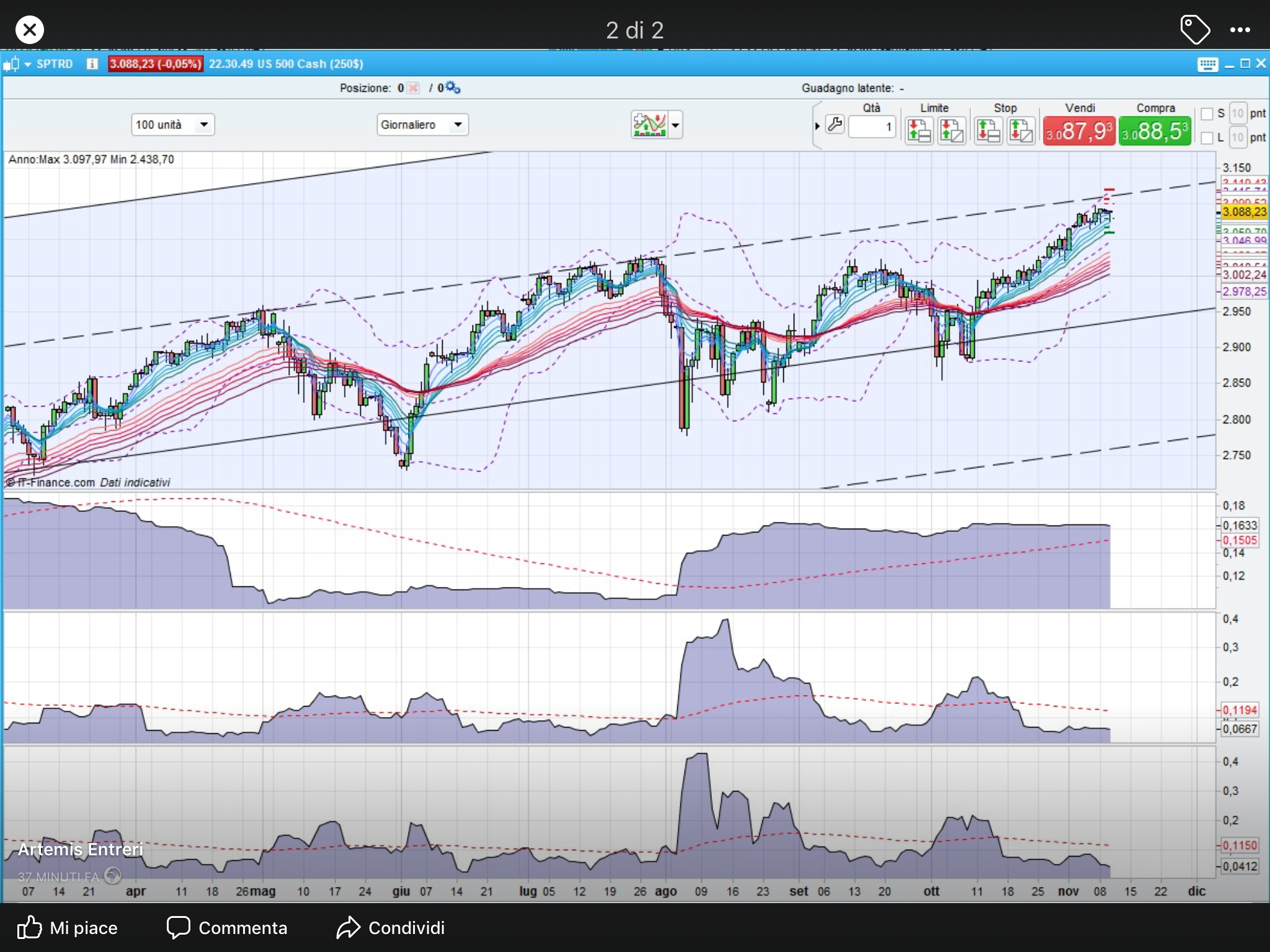
How can people trade in this way?!?

On the internet I see so many chart’s set up. It’s amazing how people can consistently trade in this way with no chance of watchIng the candles and the price action, covered with a lot of useless stuff. It’s seem Las Vegas Strip or the Christmas lights.

This is my MT5 trading set-up

The candles, an hourly chart and just the classic moving average in soft colors. Nothing else. Remember less is more. The focus must be on the price and its action. I never use indicators and oscillators, only the simple moving averages (10, 20, 50, 100, 200) and the volatility stop. Next post I will explain how usefully is the volatility stop and how to use properly.

Progetta un sito come questo con WordPress.com
Comincia ora